
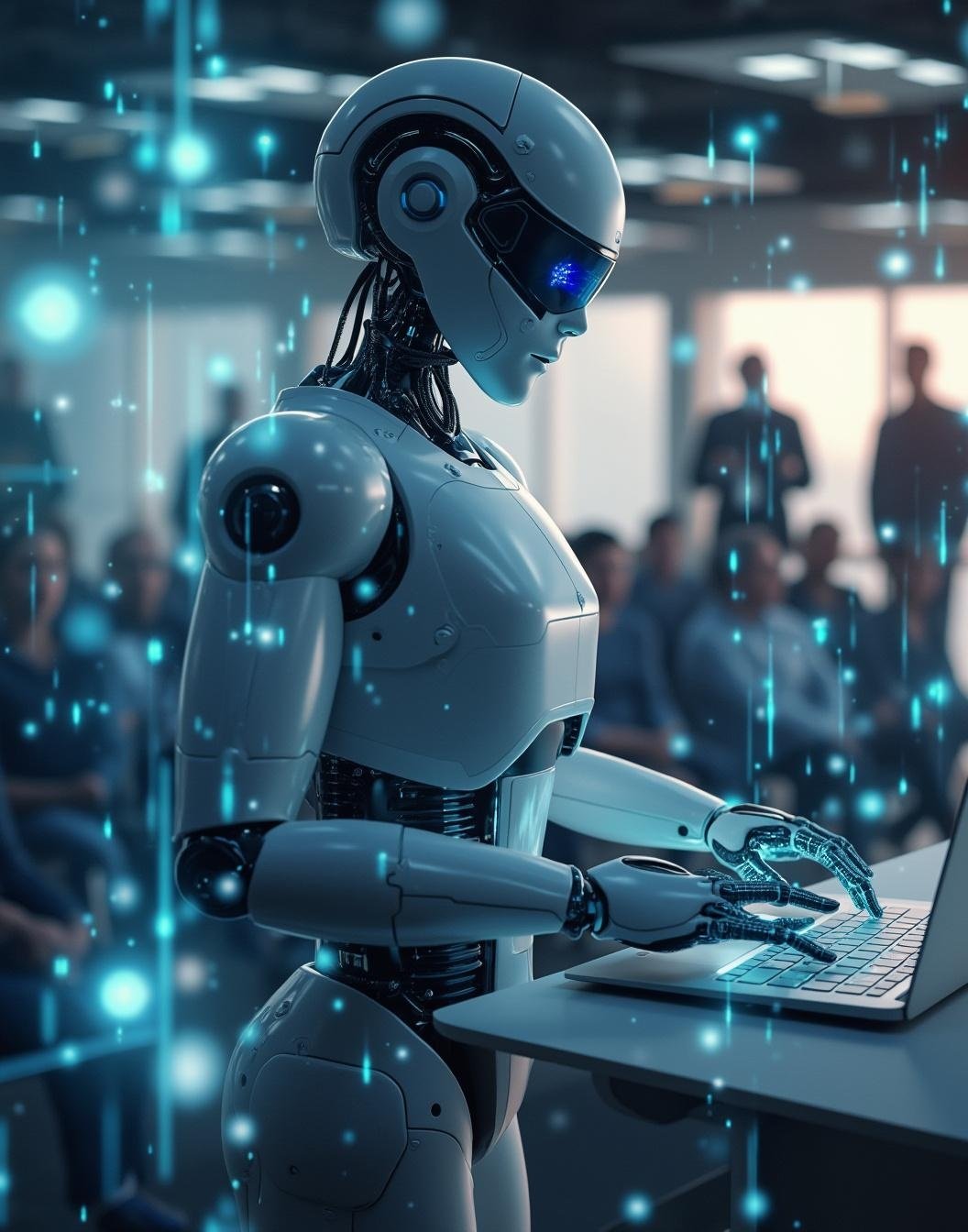
Artificial intelligence has moved from the periphery of education to its beating heart. In 2025, large multimodal models guide students through text, video and voice, tailoring every exercise to personal pace and preference. Skill barriers that once kept learners out of advanced math, coding or design are dropping fast, and the cost of high-quality instruction continues to fall.
Classrooms and corporate training rooms are now stocked with AI tutors, 24/7 chat assistants and curriculum engines that spot gaps the moment they appear. Automated grading, feedback loops and immersive game-based lessons let teachers and trainers focus on mentorship while algorithms handle the drudgery. Wildfires News, which tracks emerging ed-tech, notes that even small schools now deploy sophisticated content-creation tools once reserved for elite institutions.
The workplace feels the shift just as strongly. Sixty-five percent of employers confess to a widening skills gap, and platforms from Amazon to local community colleges are racing to upskill staff in machine learning, data analysis and AI safety. Economists forecast a $15.7 trillion boost to global GDP by 2030 if this learning curve is climbed, and early signs—like Nobel-winning research accelerated by AI—suggest the prediction isn’t fantasy.
Looking ahead, education is becoming an active partnership: learners set goals, AI coaches nudge them forward, and real-time data keeps everyone honest. Detection tools defend academic integrity, while “superagency” effects give novices near-expert capabilities. As our reporting at Wildfires News shows, the era of lifelong, on-demand mastery is no longer a vision statement—it’s policy, product and practice on every campus and in every conference room.



Leave a Reply